
Why Every Marketplace Order Is Building Someone Else's Loyalty Program
Payal Tripathy
Co-founder, Kutlerri.ai
Read time : 6 min
Every DoorDash or Uber Eats order generates a customer profile: name, contact details, order history, spending patterns. The platform keeps all of it. The restaurant gets the order and the commission bill. That is the business model working as designed.
Who owns the customer when an order comes through DoorDash?
The platform does. On a Marketplace order, DoorDash keeps the customer's name, email, and phone number. The restaurant receives the order and the commission bill, nothing more.
Direct catering is a corporate catering order placed with the restaurant itself rather than through a marketplace, so the restaurant keeps the buyer's contact details, billing relationship, and order history. Kutlerri.ai runs that channel for US restaurant operators, from finding corporate demand near each location through to the closed order.
As per DoorDash's Q2 2026 results, released 5 August 2026:
In the 12 months through Q2 2026, we increased the number of U.S. paid DashPass members by more than we did over the previous 24 months combined.
The faster DashPass grows, the more customers form a habit around the app, not around any restaurant inside it.
DashPass is designed to build loyalty to the platform, not to the restaurant.
Per DoorDash's own merchant pricing page, DoorDash charges a commission of 15% on the Basic plan and 30% on Premier. (Source: DoorDash Merchant Pricing)
The restaurant funds that transaction and on a Marketplace order walks away with no customer-level data. The same platform offers a first-party Online Ordering product at 0% commission where the restaurant does get the customer's details. That is the tell: the data was always there. It was the Marketplace order that withheld it.
What that looks like in practice on a Marketplace order:
- Per DoorDash's own Analytics product page, Marketplace reporting gives merchants zip codes and heatmaps of where customers are ordering from. Individual customer name, email, and phone number are available only on Online Ordering orders. (Source: DoorDash Analytics)
- On a Marketplace order, the restaurant has no direct path to re-market, follow up, or run a retention campaign with that buyer. Per DoorDash's own Analytics product page, Marketplace merchants receive aggregate data only, no individual contact details to act on.
The platform is a customer acquisition tool the restaurant pays for repeatedly, with no compounding return.
Do catering marketplaces have the same problem as delivery apps?
Yes. A catering order placed through ezCater or a similar platform leaves the account relationship with the marketplace, not the restaurant. The orders are larger and the buyers are corporate, but the structure is identical: the platform holds the customer, and the restaurant fulfills the order.
The corporate buyer who placed a $600 order is the platform's client. If the algorithm changes, if fees shift, or if a competitor secures better placement, that account moves, and the restaurant has no direct line to the buyer to hold it.
The numbers reflect this, per Food On Demand's July 2026 report on Monkey Catering Platform's 2026 State of Catering data:
- Marketplace catering orders produce average order values 6–8% lower than first-party orders.
- Marketplace share of catering orders is projected to reach 36% in 2026, up from 12.8% in 2021.
Using a catering marketplace to generate early orders is a reasonable starting point. Treating it as the primary channel means two things: the account relationship stays with the marketplace on every order, and per Food On Demand's July 2026 report, marketplace catering orders produce average order values 6 to 8 percent lower than first-party orders. Those are two separate costs: one is revenue, one is the relationship itself. For the margin side of this argument, read: Paying 25% to DoorDash? There's a Channel Delivery Apps Can't Touch
Here is where every marketplace order ends up, and where a direct one doesn't:
| The Breakdown | Marketplace Order | Direct Account |
|---|---|---|
| Who holds the customer record | The platform holds it. The restaurant has no access. | The restaurant keeps it. Name, email, and order history stay with you. |
| Who sets the fee | The platform. Marketplace commissions run 15–30% per order. | No per-order commission. You set your own pricing. |
| What happens when the algorithm changes | The account moves. No direct line to the buyer. | Nothing changes. The relationship stays with you. |
| Who owns the reorder | The platform. The buyer returns to the app. | The restaurant. The buyer reorders directly with you. |
Source: DoorDash Marketplace merchant pricing
Scope note: the Marketplace column refers to third-party Marketplace orders on DoorDash and ezCater specifically, not their first-party or direct ordering products.
The scale of what is being left on the table
Per Food On Demand's July 2026 report, the average catering order in 2025 reached approximately $416, up just 3% from the previous year. The buyer behind that order is what makes this urgent:
- As per ezCater's 2025 Feeding the Workplace report, surveying over 2,300 workplace food stakeholders, 43% of organizations have a recurring meal program in place, up 17% from 2024. (Source: ezCater 2025 Feeding the Workplace Report)
- As per Food On Demand's July 2026 report on Monkey Catering Platform's State of Catering data, 60% of catering orders come from just 5% of customers.
These are recurring accounts: companies with established budgets, predictable ordering cycles, and a preference for a vendor they trust. A law firm ordering working lunches bi-weekly. A healthcare company feeding its staff through quarterly training sessions. Fulfilled through a marketplace, those accounts belong to the platform. Closed direct, they reorder on the restaurant's schedule with no commission attached to every ticket. If you are building the channel from scratch, start here: The Catering Playbook: How to Build a Revenue Channel That Runs Without Chaos
What direct catering actually transfers to the restaurant
A direct catering order produces a named contact at a named company, with a billing relationship, a delivery preference, and an order history the restaurant owns and can build on.
That is exactly what happened with RASA. In 10 months, Kutlerri's Catering Sales Agent closed $450,000 in new catering revenue across five locations, more than 10 times what RASA paid for the service. No new hires and no paid ads; every account relationship stayed with RASA. Read the full case study.
That account is not subject to algorithm changes or platform fee adjustments. It belongs to the restaurant because the restaurant built it.
As per Qu's 2025 State of Digital report, surveying more than 170 brands across 85,000 locations, 40% of enterprise brands said first-party ordering will drive their highest revenue growth this year. Enterprise chains have the analyst teams to run that math. The structural argument is identical for a three-location operator, with far less room to absorb the commission.
The highest-value accounts, the ones that reorder consistently and at scale, need to be relationships the restaurant controls.
None of this is a secret. Every operator knows corporate accounts are worth more than marketplace tickets. The reason it does not happen is that finding the offices near each location, working out who orders the food, and following up consistently over weeks is a full-time job that no one at a three-location restaurant has. It gets done in the quiet week and abandoned in the busy one.
Kutlerri.ai identifies corporate demand around each location, builds a verified prospect list, and runs outreach across email and calls until the order is closed. Every account that converts stays with the restaurant, not with a platform taking a percentage of every reorder.
Book a demo to see how Kutlerri builds your direct catering channel.
FAQ
Do restaurants get customer data from DoorDash orders?
On a Marketplace order, no. DoorDash's own Analytics product page confirms that Marketplace reporting gives merchants zip codes and heatmaps of where customers are ordering from. Individual customer name, email address, and phone number are available only on DoorDash's Online Ordering product, not on Marketplace orders.
What does a restaurant give up on a catering marketplace order?
The account relationship. A catering order placed through ezCater or a similar platform leaves the buyer's contact details, billing relationship, and reorder history with the marketplace. The restaurant receives the order and the commission bill. The platform retains the client.
What is the difference between a marketplace catering order and a direct one?
A marketplace order produces a transaction. A direct order produces an account — a named contact at a named company with a billing relationship the restaurant owns and can build on. Per Food On Demand's July 2026 report, marketplace catering orders also produce average order values 6–8% lower than first-party orders, before commission is applied.
Who owns a catering account?
Whoever holds the buyer's contact information and controls the follow-up owns the account. On a marketplace order that is the platform. On a direct order it is the restaurant, which is why direct catering converts a one-time order into a recurring revenue relationship the platform cannot take.
Sources
- DoorDash Q2 2026 Investor Relations: ir.doordash.com
- DoorDash Merchant Pricing: merchants.doordash.com/en-us/products/marketplace
- DoorDash Analytics: merchants.doordash.com/en-us/products/analytics
- Food On Demand, July 2026: foodondemand.com/07152026/catering-outpaces-restaurant-industry-growth/
- ezCater, 2025 Feeding the Workplace Report
- Qu, 2025 State of Digital: qubeyond.com/2025-state-of-digital-restaurant-report/

Kutlerri.ai maps your catering demand, builds the prospect database, runs the outbound motion, and handles every inbound inquiry so your catering program runs like a revenue engine, not an afterthought.
Get a demo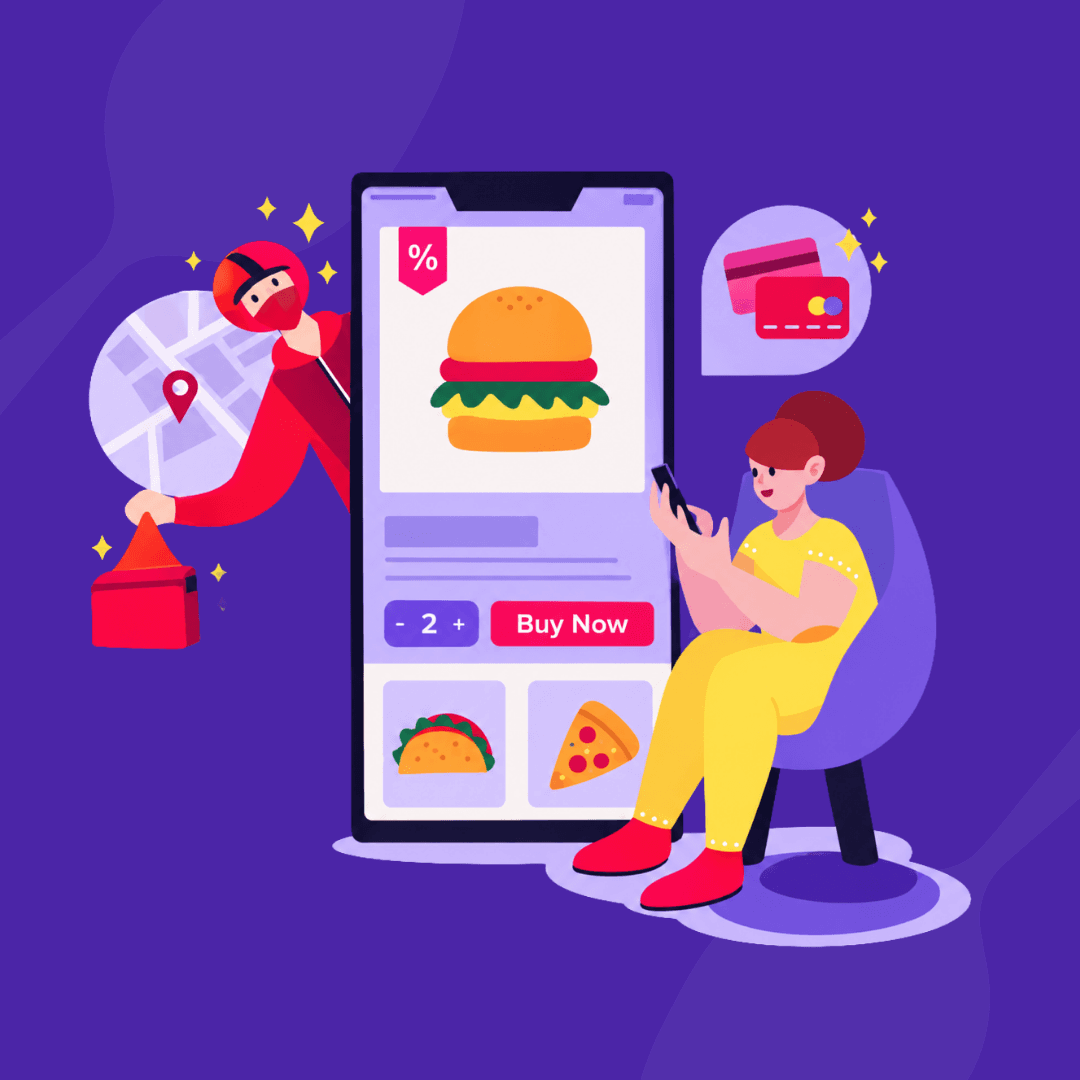
Why Every Marketplace Order Is Building Someone Else's Loyalty Program
Every DoorDash, Uber Eats and ezCater order builds a customer profile the platform keeps. Here is who owns the customer, and what a direct catering account returns to the restaurant instead.
Read more →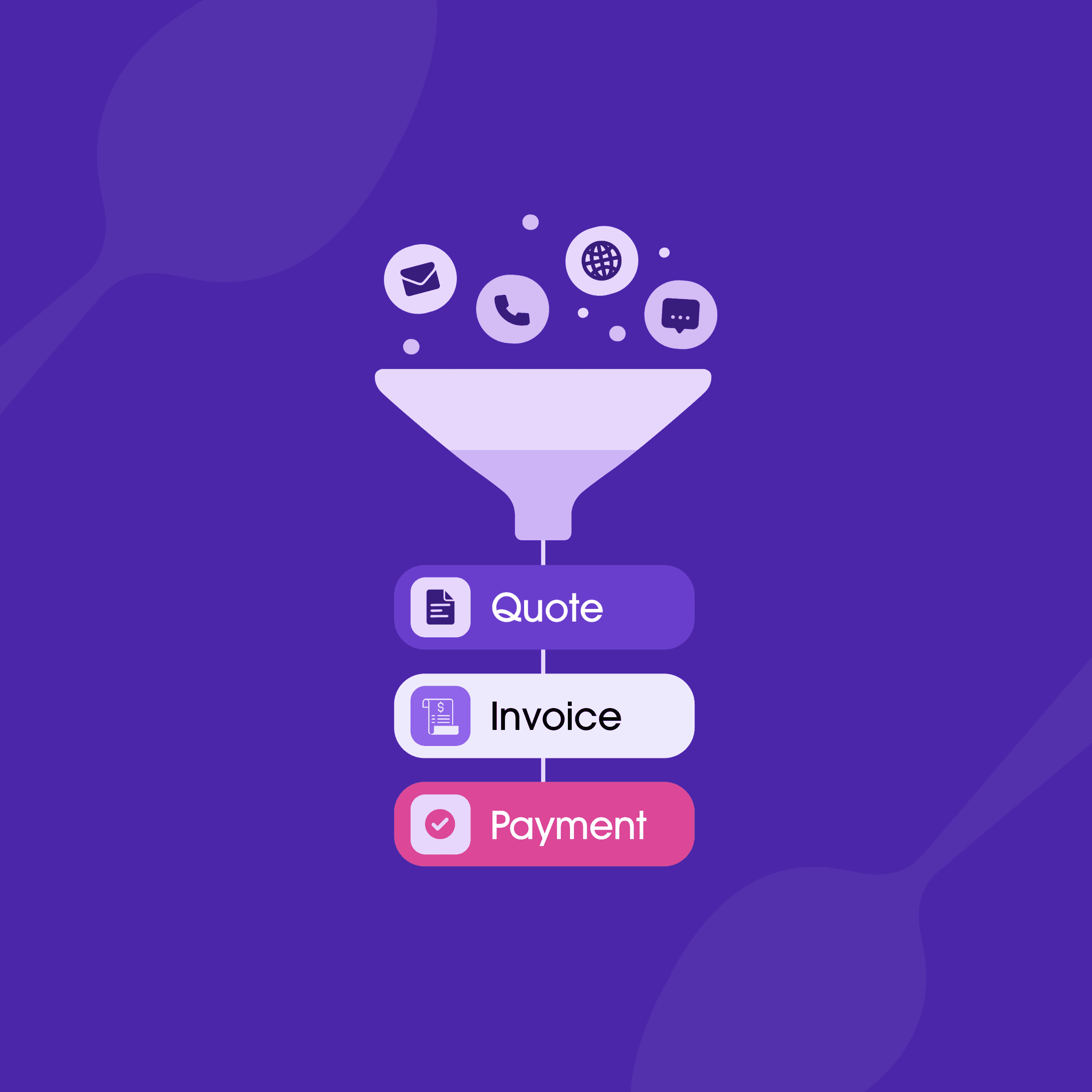
The Catering Playbook: How to Build a Revenue Channel That Runs Without Chaos
Most restaurants capture 4 to 8% of their catering potential. The benchmark for operators running it as a real channel is 20%. What is sitting uncaptured within ten miles of your location right now?
Read more →
Your Restaurant Is Sitting on a Catering Goldmine. Here's What's Blocking It.
Most restaurants don't have a catering operation. They have a catering habit. What would change if every inquiry, every quote, and every follow-up ran through the same system every single time?
Read more →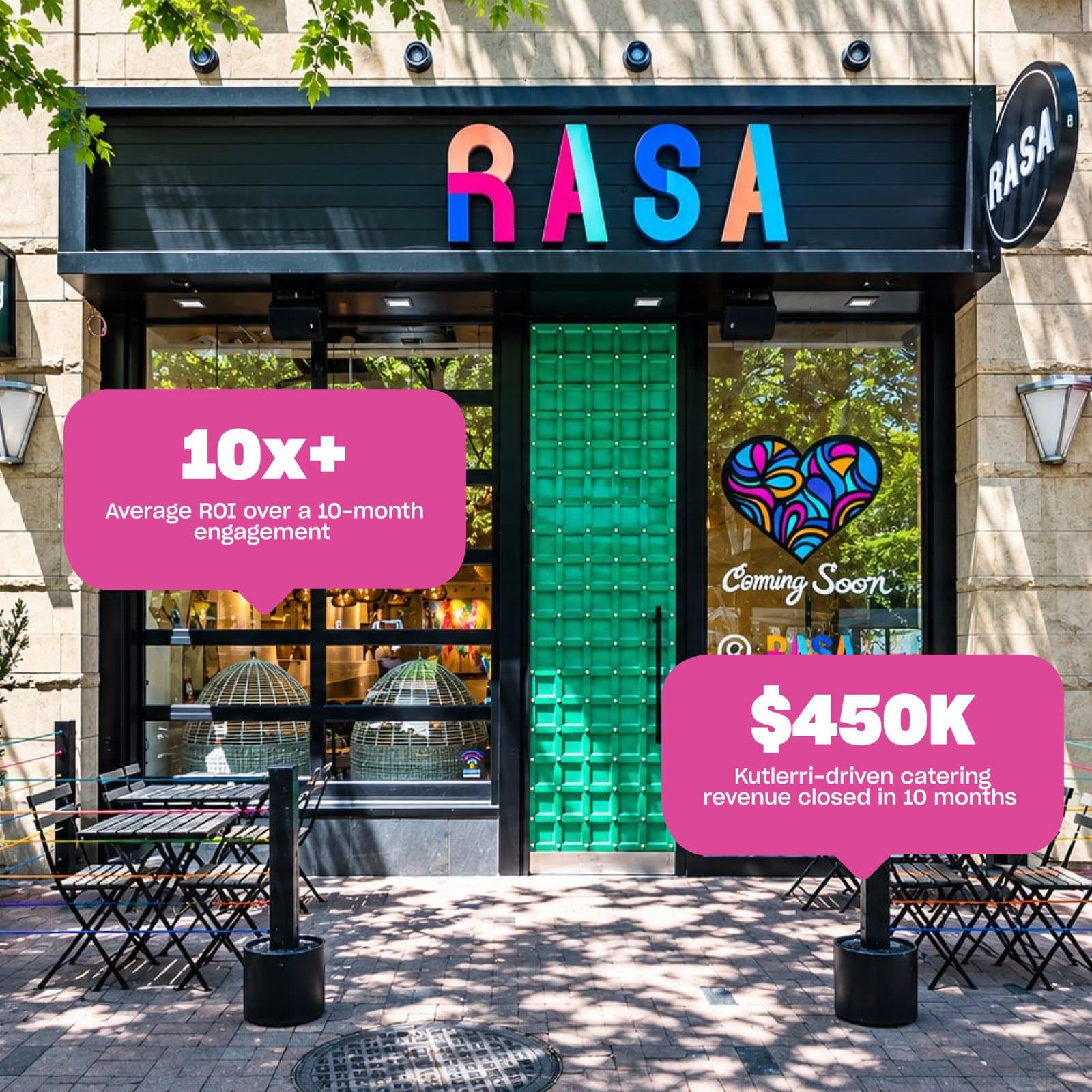
How RASA Closed $450K in New Catering Revenue in 10 Months Without Hiring Anyone
Ten months ago, RASA waited for catering orders to come in. Today, an AI agent goes out and gets them. See how Kutlerri.ai's Catering Sales Agent closed $450K in new catering revenue, more than 10 times what RASA paid.
Read more →