
The Catering Playbook: How to Build a Revenue Channel That Runs Without Chaos
Sthita
Kutlerri.ai
Read time : 2 min
Most restaurants don't have a catering operation. They have a catering habit.
Someone checks the inquiry email when they remember it. A quote gets built from memory by whoever picked up the phone, sent late, revised twice, and followed up on never. The order comes through as if the client remembers to call back. If they don't, nobody notices until the revenue line looks thin at the end of the month. It works, occasionally. It scales, never.
The restaurants consistently growing catering revenue are not working harder than the ones stuck at 6% catering share. They're running a different system. One where every inquiry moves through the same structured process regardless of who handles it, every outreach runs on a cadence instead of a whim, and every won account is actively retained instead of passively hoped for.
This is that system. The exact playbook for turning catering from a chaotic side habit into the most predictable revenue channel in your operation.
The Diagnosis Before the Playbook
Before building anything, one honest question needs an honest answer: where is your catering revenue coming from right now?
For most restaurants, the answer is almost entirely inbound. Someone found you, called you, or emailed you. You quoted them, they ordered, maybe they came back. That's not a program. That's a series of transactions held together by luck and the occasional repeat client who happens to be loyal.
A real catering channel has two sides working in parallel. Inbound: a system that handles every inquiry that arrives with speed, consistency, and zero dropped balls. Outbound: a motion that goes and finds the demand that will never call you on its own.
Most operators instinctively fix the inbound side first because the problems are more visible. An unanswered inquiry stings in a way that an unpursued prospect never does. But the outbound side is where the real revenue growth lives. Both need to work. And neither works well without a deliberate system behind it.
Getting Inbound Right
Inbound catering fails in the same three places in almost every restaurant operation. Fix these and your conversion rate changes immediately.
The first is response time. Corporate catering buyers are not browsing. When they reach out, they have an event, a deadline, and usually two or three other restaurants they contacted at the same time. Whoever responds first wins the majority of the time, not because their food is better or their price is lower, but because buyers select on reliability. If your current average response time is more than one hour during business hours, you are losing deals before the conversation starts. This is not a motivation problem. It is a structural one. Catering inquiries need a dedicated owner, a single channel they all flow into, and a response time standard that gets measured every week.
The second is quote consistency. A quote built from memory by whoever answered the phone is not a repeatable sales process. Every quote should follow the same structure. Itemized, margin-checked, clearly presented, and out the door fast enough that the client is still comparing options rather than already committed elsewhere. The slow-poor proposal, starting from scratch on every inquiry, is one of the single highest hidden costs in catering operations. It slows response time, introduces pricing inconsistency, and puts the quality of your sales process at the mercy of who happens to be working that shift.
The third is follow-up. Most catering deals are not lost in the first response. They are lost in the silence after it. A client who received a quote and hasn't responded in 48 hours is not uninterested. They are busy. A follow-up at 48 hours, then a second with the right message, recovers a significant percentage of quotes that would otherwise go cold. Almost no restaurant has a systematic follow-up process built into their inbound workflow. The ones that do win on accounts their competitors quoted-and-forgot about.
Get these three right and inbound catering starts to feel less like a guessing game and more like a process with a predictable conversion rate you can actually improve.
Building the Outbound Engine
Fixing inbound is necessary. It is not sufficient. Because inbound, no matter how well it runs, only captures the demand that finds you. And the demand that finds you is a small fraction of what actually exists near your locations.
The outbound engine starts with one thing most restaurants have never built: a real prospect database.
Within five to ten miles of each of your locations sit tech companies, law firms, healthcare offices, co-working spaces, and corporate campuses ordering catering on a recurring basis. Weekly team lunches. Monthly all-hands meetings. Quarterly client events. These businesses are not waiting to discover you. They are locked in on a vendor. Your job is to show up with relevance and consistency until you become the better option.
That starts with knowing they exist. Not in the abstract, but specifically: company name, headcount, the name and contact information of the office manager or executive assistant who actually places the catering order. A prospect database built to this level of detail transforms outreach from guesswork into a targeted motion with measurable results.
Once the database exists, the next question is who to contact today. Not every prospect at once. Prioritize by fit: high-frequency industries first. Largest clusters by headcounts second, businesses within your tightest and most reliable delivery radius third. Each cluster works in sequence rather than spraying outreach indiscriminately and wondering why the response rate is low.
The outreach itself needs to earn attention, not assume it. Generic catering emails get ignored because they read like generic catering emails. An email that references the company's industry, acknowledges a relevant seasonal moment, and suggests a specific menu option reads like it came from someone who did their homework. It doesn't need to be long. It needs to be relevant. One focused paragraph that demonstrates context will always outperform three paragraphs about how good your food is.
And then the follow-up. Most catering deals in outbound, exactly like inbound, are not lost in the first message. They are lost in the silence after it. A structured sequence across two to three weeks, with an initial email, a follow-up, and a final check-in, gives a prospect three opportunities to engage before they are moved to a slower nurture cycle. The restaurants consistently breaking into new corporate accounts are not sending single emails. They are sending consistently, over a longer period, with more patience than anyone else in the market.
Turning First Orders Into Recurring Revenue
The playbook doesn't end when the first order is placed. That's actually where the most important part begins. Winning a new catering client is the expensive part of the equation. The sales effort, the outreach, the quote, the follow-up. All of that investment only returns if that client comes back. And they will come back, assuming the food was good, but because someone made reordering frictionless and staying top of mind effortless.
A check-in within 48 hours of the event. A follow-up at 30 days. A proactive reach-out before the next seasonal moment when their ordering intent is naturally high. End of quarter. Back to office periods. Holiday event planning. These are the windows when a well-timed message from a vendor who understands their preferences converts immediately. None of this is complicated. All of it requires a system to enforce it, because without one, it always loses to the next immediate fire in the kitchen.
The math is worth understanding clearly. A corporate account ordering twice a month at $600 per order is worth $14,400 over twelve months, and retaining it costs almost nothing. That profile per month across five locations is over $865,000 in incremental annual catering revenue. That number doesn't come from running food or chasing leads. It comes from a retention process that converts single orders into accounts and accounts into long-term revenue.
The Metrics That Tell You If It's Working
A catering operation without weekly metrics is running on feel. And feel, at catering volumes across multiple locations, is not a reliable operating instrument. Five numbers tell you whether the system is healthy or quietly broken.
Inquiry response time. If it's creeping past one hour, conversion is already dropping before it shows up in revenue.
Quote-to-conversion rate. Below 40% means something in the process — speed, pricing, follow-up, or menu clarity — needs a fix.
Catering revenue as a percentage of total sales, by location. Not portfolio average. By location. A location sitting at 5% when the benchmark is 15% has a specific, fixable problem that a blended number will never surface.
Repeat client rate. If less than 40% of your catering revenue is coming from returning clients, you are spending more acquiring new accounts than retaining the ones you already won.
Pipeline coverage. How much confirmed catering revenue sits beyond the current week? This number means the outbound system is working or that it isn't.
The System Is the Whole Point
Catering is hard to grow. It is hard to grow without a system, because every part of it — from the first inquiry to the tenth repeat order — requires consistent execution across a process that most restaurants have never formally built.
The operators outperforming on catering right now are not exceptional salespeople. They did not hire a dedicated catering director or invest in a marketing budget. They built the inbound engine, built the outbound motion, built the retention process, and they measure it weekly against the metrics that matter.
That is the entire competitive advantage. Not theory. The actual sequence.
The only question that remains is whether you build it before the restaurant down the street does.

Kutlerri.ai maps your catering demand, builds the prospect database, runs the outbound motion, and handles every inbound inquiry so your catering program runs like a revenue engine, not an afterthought.
Get a demo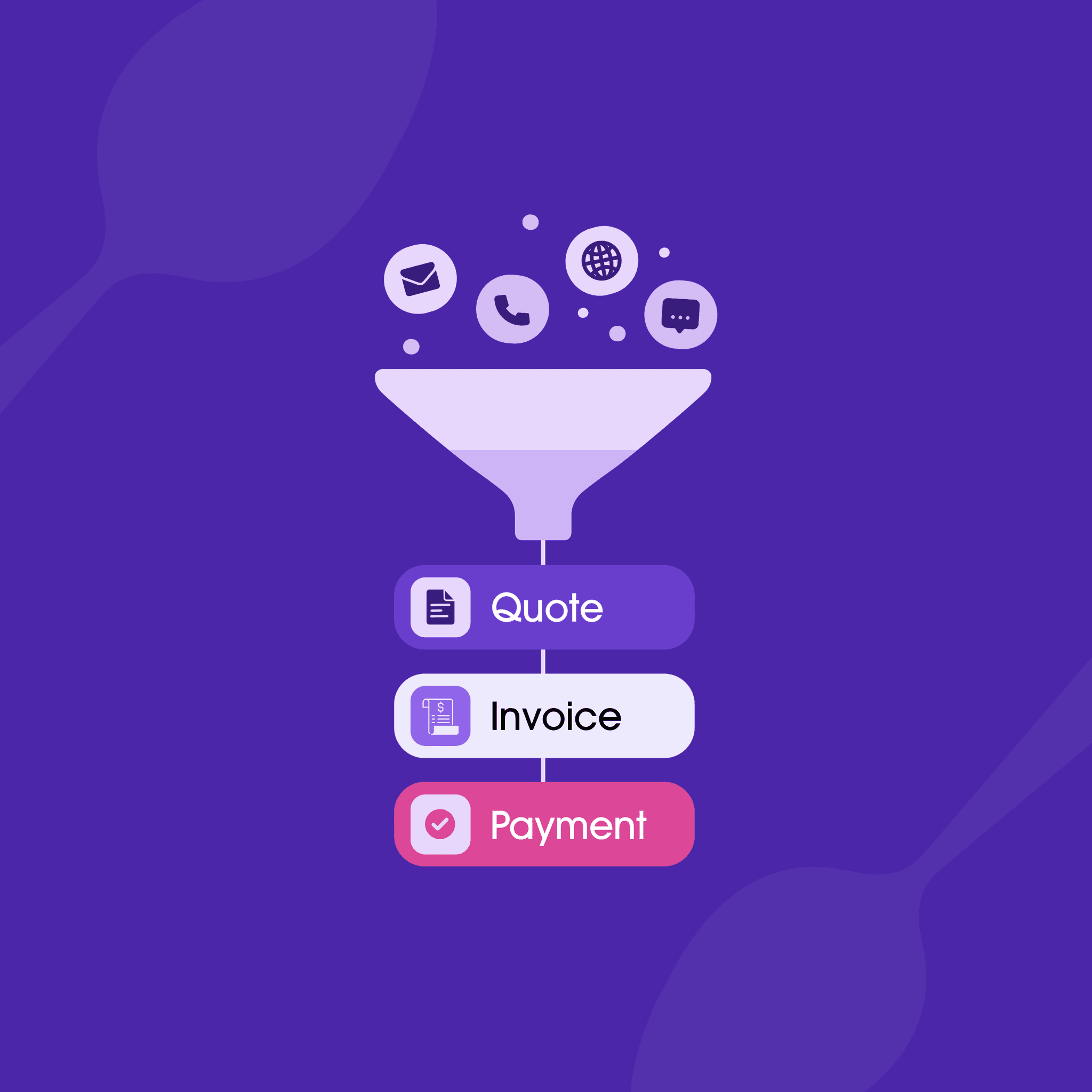
The Catering Playbook: How to Build a Revenue Channel That Runs Without Chaos
Most restaurants capture 4 to 8% of their catering potential. The benchmark for operators running it as a real channel is 20%. What is sitting uncaptured within ten miles of your location right now?
Read more →
Your Restaurant Is Sitting on a Catering Goldmine. Here's What's Blocking It.
Most restaurants don't have a catering operation. They have a catering habit. What would change if every inquiry, every quote, and every follow-up ran through the same system every single time?
Read more →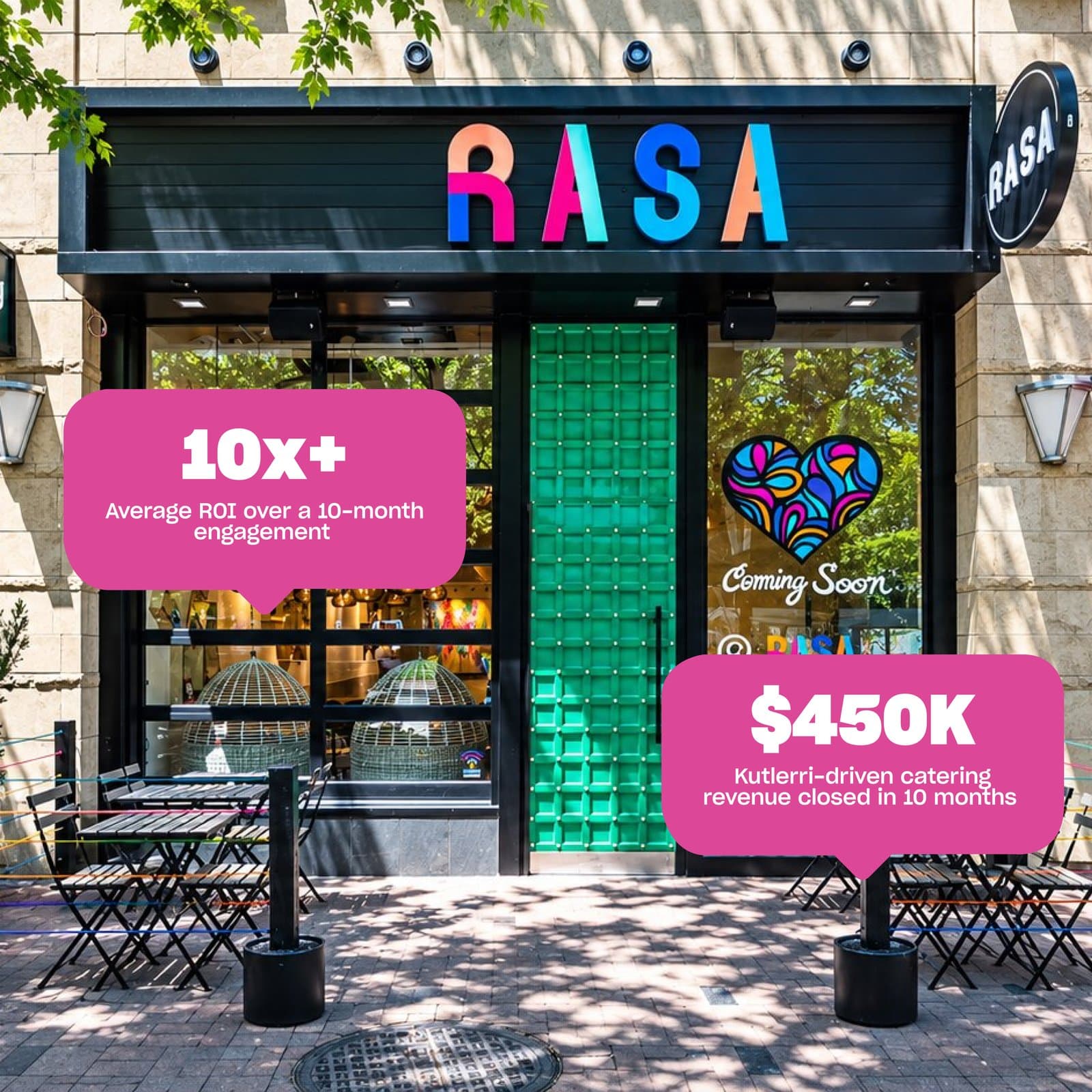
How RASA Closed $450K in New Catering Revenue in 10 Months Without Hiring Anyone
Ten months ago, RASA waited for catering orders to come in. Today, an AI agent goes out and gets them. See how Kutlerri.ai's Catering Sales Agent closed $450K in new catering revenue, more than 10 times what RASA paid.
Read more →